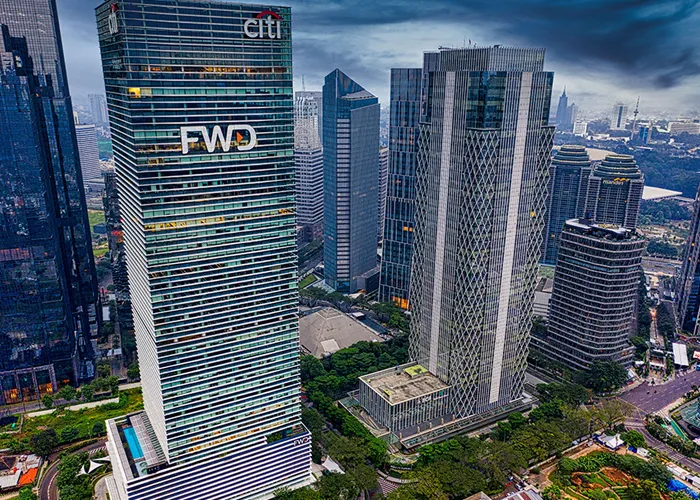
Abstract layered network of interconnected nodes and flowing digital pathways representing intelligent information discovery
SansungBNIVital StrategiesWestern Union
99+

Trusted by

Customers across the globe

AI Search Optimization for Businesses and Enterprises

Search is no longer just about ranking on a results page. AI-powered search engines and answer platforms now generate, summarize, and recommend content directly to users. Binari's AI Search Optimization services help corporate, enterprise, and government organizations in Indonesia become more visible, understandable, and recommendable in these AI-driven environments through Generative Engine Optimization (GEO) and Answer Engine Optimization (AEO).

Key Features of AI Search Optimization

Our AI Search Optimization services address the specific requirements of large organizations seeking to maintain and grow their presence in AI-powered search environments. Each capability is designed to improve how AI systems understand, represent, and recommend your brand.

Generative Engine Optimization (GEO)

Generative Engine Optimization (GEO)

We optimize your content and digital presence so that AI systems generating summaries and synthesized answers are more likely to include and accurately attribute your organization. GEO focuses on the clarity, authority, and structure of content that AI models draw upon when constructing responses.

Structured Data Implementation

Structured Data Implementation

We apply schema markup and structured data to your digital properties, giving AI search engines the context they need to extract and display your organization's information in rich result formats such as knowledge panels and direct answer boxes.

Answer Engine Optimization (AEO)

Answer Engine Optimization (AEO)

We structure content to improve its eligibility for AI answer formats including featured snippets and knowledge panels. AEO ensures that when users ask questions relevant to your organization, AI answer platforms are equipped to surface accurate and complete responses.

Brand Visibility and Trust Signal Development

Brand Visibility and Trust Signal Development

We identify and strengthen the content signals that AI systems use to evaluate source authority and trustworthiness. Consistent, accurate, and well-structured information across your digital presence improves the likelihood that AI platforms will recommend your organization.

Semantic Content Optimization

Semantic Content Optimization

We refine content to communicate meaning clearly and consistently, enabling AI systems to interpret your brand's information accurately. This goes beyond keyword placement to address how concepts, topics, and entities within your content relate to one another.

Scoped for Enterprises and Governments

Scoped for Enterprises and Governments

We design AI Search Optimization approaches that account for the scale, complexity, and compliance considerations of large organizations. Whether managing multiple business units, public-facing mandates, or diverse audience segments, our work is scoped to fit institutional requirements.

Understanding AI Search Optimization and Its Business Impact

AI Search Optimization is the practice of ensuring that a brand's content, information, and digital presence are structured, clear, and authoritative enough to be accurately understood, cited, and recommended by AI-powered search engines and answer platforms. As these systems increasingly determine what information users see and trust, organizations that rely solely on traditional search engine optimization risk becoming less visible in the moments that matter most.

What is AI Search Optimization?

AI Search Optimization encompasses two closely related disciplines that address how AI-driven systems discover and present information.

Generative Engine Optimization (GEO) focuses on optimizing content so that AI systems capable of generating summaries, answers, and recommendations are more likely to include and accurately represent your brand. When an AI search engine synthesizes a response from multiple sources, GEO strategies improve the likelihood that your organization's content is drawn upon and attributed correctly.

Answer Engine Optimization (AEO) focuses on structuring content so that AI answer platforms and voice-driven systems can extract and surface direct answers. This includes optimizing for featured snippets, knowledge panels, and other AI-generated answer formats that appear before a user ever visits a website.

While traditional SEO services concentrate on improving keyword rankings and building backlinks within conventional search result pages, AI Search Optimization addresses a different layer of the search ecosystem: one where AI models interpret, synthesize, and present information on behalf of the user.

Why AI Search Optimization Matters for Large Organizations

For corporate, enterprise, and government organizations, brand presence in search has always been a strategic concern. The shift toward AI-driven search introduces new complexity. AI systems do not simply rank pages; they evaluate the clarity, authority, and consistency of information across a brand's entire digital footprint before deciding whether to include it in a generated answer or recommendation.

Traditional SEO investments may not translate directly into AI search visibility. An organization can hold strong keyword rankings and still be absent from AI-generated answers if its content lacks semantic clarity, structured data, or sufficient trust signals. For large organizations managing complex digital ecosystems, this gap represents both a risk and an opportunity.

In Indonesia's corporate and government sectors, where institutional credibility and accurate public representation carry particular weight, the ability to shape how AI systems understand and present your organization is a meaningful strategic advantage. Organizations that invest in AI Search Optimization are better positioned to remain discoverable and accurately represented as search behavior continues to evolve.

How AI-Powered Search Engines and Answer Platforms Work

AI-powered search engines use large language models and machine learning systems to interpret queries, evaluate sources, and generate responses rather than simply returning a ranked list of links. These systems assess content for relevance, clarity, and trustworthiness before deciding what to include in a generated answer.

Several AI search features directly affect how organizations are represented online:

  • Featured snippets surface concise answers extracted from web content at the top of search results, often without requiring a user to click through to the source page.
  • Knowledge panels present structured information about organizations, products, or topics drawn from authoritative sources and structured data.
  • AI-generated answers synthesize information from multiple sources into a single cohesive response, citing or attributing content based on perceived authority and relevance.

Semantic understanding plays a central role in how these features are populated. AI systems interpret the meaning and relationships between concepts rather than matching keywords mechanically. Structured data, such as schema markup, helps these systems extract and categorize information accurately. Organizations that provide clear, well-structured, and authoritative content are better positioned to appear in these high-visibility formats.

Key Differences Between Traditional SEO and AI Search Optimization

Traditional SEO and AI Search Optimization share a common foundation in content quality and technical site health, but they diverge significantly in focus and methodology.

DimensionTraditional SEOAI Search Optimization
Primary goalRank higher in keyword-based search resultsBe accurately represented and recommended by AI systems
Core tacticsKeyword targeting, backlink acquisition, on-page optimizationSemantic content clarity, structured data, brand trust signals, GEO and AEO strategies
Search environmentConventional search engine result pagesAI-generated answers, featured snippets, knowledge panels, answer platforms
Content evaluationKeyword relevance and link authoritySemantic relevance, content clarity, and source trustworthiness
Adaptation requirementResponds to algorithm updatesRequires ongoing adaptation as AI models and search behaviors evolve

Organizations that have invested in strong traditional SEO services have a useful foundation, but AI Search Optimization requires additional strategies specifically designed for how AI systems evaluate and use content.

Benefits of AI Search Optimization for Corporate, Enterprise, and Government Organizations

  • Improved discoverability in AI-driven environments: Ensuring your organization appears in AI-generated answers and featured formats where decision-makers increasingly look for information.
  • Accurate brand representation: Reducing the risk of AI systems misrepresenting or omitting your organization by providing clear, structured, and authoritative content.
  • Stronger trust signals: Building the content authority and consistency that AI systems use to evaluate whether a source is reliable enough to cite or recommend.
  • Qualified lead generation: Reaching audiences at the moment they are actively seeking information relevant to your organization's services or mandate.
  • Alignment with complex organizational needs: Addressing the scale and diversity of digital content that large enterprises and government bodies manage across multiple channels and audiences.

High-Level Strategies for AI Search Optimization

Effective AI Search Optimization draws on content strategy, technical implementation, and ongoing monitoring. The most impactful approaches include:

  • Semantic content optimization: Writing content that clearly addresses specific questions and topics in a way that AI systems can interpret and categorize accurately, rather than optimizing primarily for keyword density.
  • Structured data and schema markup: Implementing markup that helps AI search engines extract and display key information about your organization, services, and content in rich result formats.
  • Authoritative brand signals: Maintaining consistent, accurate, and well-sourced information across your digital presence so that AI systems recognize your organization as a trustworthy source.
  • Content gap assessment: Identifying areas where your current content does not adequately address the questions AI systems are likely to encounter from your target audiences. A structured SEO audit can surface these gaps and inform prioritization.
  • Technical implementation support: Ensuring that the underlying architecture of your digital properties supports structured data, fast content delivery, and accurate indexing. Where technical changes are required, technical implementation support can help bridge the gap between strategy and execution.
  • Continuous monitoring and adaptation: Tracking how AI systems represent your brand over time and adjusting content and structure as AI search technologies evolve.


Related Solutions to AI Search Optimization

AI Search Optimization works most effectively as part of a broader digital strategy. These Binari services support the foundational and technical requirements that underpin strong AI search performance.

FAQ About AI Search Optimization

SansungBNIVital StrategiesWestern Union
99+

Trusted by

Customers across the globe

faq-gradient

Traditional SEO focuses on improving a website's ranking in conventional search engine result pages through keyword targeting, backlink acquisition, and on-page optimization.

Generative Engine Optimization (GEO) addresses a different challenge: ensuring that AI systems capable of generating synthesized answers and summaries include and accurately represent your brand's content. GEO focuses on content clarity, semantic structure, and source authority as evaluated by AI models.

Answer Engine Optimization (AEO) concentrates on structuring content so that AI answer platforms and voice-driven systems can extract and surface direct answers. It targets formats such as featured snippets and knowledge panels where AI systems present information without requiring users to navigate to a source page.

All three disciplines share a foundation in content quality, but GEO and AEO require specific strategies designed for how AI systems interpret and use information rather than how conventional search engines rank pages.

faq-gradient

AI-powered search engines evaluate content for semantic clarity, authority, and structural consistency before deciding whether to include it in generated answers or recommended results. Organizations that optimize for these criteria are more likely to appear in the AI-driven formats that users increasingly rely on for information.

AI Search Optimization improves visibility by ensuring that your content clearly addresses relevant topics, that structured data helps AI systems extract accurate information, and that your brand's digital presence projects the consistency and authority that AI models use as trust signals. The result is a higher likelihood of being cited, summarized, or recommended when users ask questions relevant to your organization.

faq-gradient

The AI search landscape includes a growing range of platforms that generate or recommend content using AI models. Major search engines have integrated AI-generated answer features into their core results pages, and dedicated AI assistant and answer platforms have expanded significantly in recent years.

Rather than optimizing for a single platform, effective AI Search Optimization focuses on the underlying content and structural qualities that AI systems across platforms tend to evaluate similarly: semantic clarity, structured data, source authority, and content consistency. Organizations that address these fundamentals are better positioned across the broader AI search environment, regardless of which specific platforms their audiences use.

faq-gradient

Effective implementation of GEO and AEO typically involves several complementary practices:

  • Semantic content development: Writing content that clearly and completely addresses specific questions and topics, structured in a way that AI systems can interpret accurately.
  • Structured data markup: Applying schema markup to help AI search engines identify and categorize key information about your organization, services, and content.
  • Brand consistency: Maintaining accurate and consistent information across all digital properties so that AI systems recognize your organization as a reliable source.
  • Content gap analysis: Identifying topics and questions your audiences are likely to ask that your current content does not adequately address.
  • Ongoing monitoring: Tracking how AI systems represent your brand over time and adapting content and structure as AI search technologies evolve.

faq-gradient

Large organizations face particular challenges in AI search environments. Complex digital presences, multiple audience segments, and the need for accurate institutional representation all create risks when AI systems misinterpret or omit organizational information.

AI Search Optimization helps corporate and government organizations maintain accurate brand representation in AI-generated answers, improve discoverability among decision-makers and stakeholders who use AI search tools, and build the content authority that AI systems use to evaluate trustworthiness. For government bodies, accurate representation in AI search results also supports public communication and institutional transparency. For enterprises, improved AI search visibility contributes directly to qualified lead generation and brand authority.

faq-gradient

AI Search Optimization draws on a combination of content strategy tools, technical implementation capabilities, and monitoring resources. Structured data and schema markup are foundational technical elements that help AI systems extract and categorize information. Content analysis tools support the identification of semantic gaps and optimization opportunities. Search performance monitoring tools track how content appears across AI-driven search features over time.

The tools appropriate for a given organization depend on its existing digital infrastructure, the scale of its content operations, and the AI search platforms most relevant to its audiences. An assessment of current digital properties is often a practical starting point for identifying where technical and content improvements will have the greatest impact.

faq-gradient

Featured snippets and knowledge panels are among the most prominent AI-driven search features, appearing at or near the top of search results and often providing users with direct answers without requiring a click-through to a source page.

AI Search Optimization improves the likelihood of appearing in these formats by ensuring that content is structured to answer specific questions clearly, that schema markup provides AI systems with the context needed to extract accurate information, and that the overall authority and consistency of your digital presence meets the threshold AI systems use to select sources for these placements. Organizations that invest in these optimizations are better positioned to occupy featured positions in the AI search results their audiences see.

background globe

Let’s talk.

We're ready to help you deliver high-performing websites, boost your business visibility in search engines, and build digital platforms tailored to your specific needs.